Showing posts with label Technology. Show all posts

Saturday, January 24, 2026

When Gen AI/Agentic AI Smart Tech Makes Us Dumb

Here’s something that’ll keep you up at night: the very technology we’re using to make our lives easier might actually be making us, well, dumber. Generative AI has exploded onto the scene, promising to revolutionize everything from how we write emails to how we solve complex problems. But there’s a darker side to this story that nobody’s talking about enough.

We’re living through an AI revolution that’s fundamentally reshaping human cognition. Less than three years after ChatGPT’s launch, 42% of young people already use generative AI daily. Sounds convenient, right? Yet beneath this technological marvel lurks a troubling reality—our brains are literally changing, and not for the better. Research from MIT, Microsoft, and Carnegie Mellon reveals that GenAI isn’t just helping us work faster; it’s systematically eroding our ability to think independently, remember information, and make authentic decisions. Even more concerning, these AI systems are becoming increasingly autonomous, making recommendations and decisions with minimal human oversight, effectively training us to stop questioning and start accepting. What we’re facing isn’t just technological advancement—it’s a cognitive crisis in the making.

The Cognitive Cost - Your Brain on AI Autopilot

Remember when you actually had to think to write something? Those days are fading fast, and your brain’s paying the price. Scientists at MIT conducted a fascinating four-month study that should alarm anyone using AI tools regularly—they strapped EEGs to 54 participants and monitored their brain activity while writing essays. What they discovered was nothing short of alarming. When people used ChatGPT to write, they worked 60% faster, which sounds fantastic until you hear the rest. Their “relevant cognitive load”—basically, the mental effort required to turn information into actual knowledge—dropped by 32%. Even worse? A whopping 83% of AI users couldn’t even remember passages they’d just written themselves. Your brain wasn’t engaged; it was basically taking a nap while the AI did the heavy lifting.

  • Brain connectivity gets slashed in half: When AI handles cognitive tasks, researchers observed that brain connectivity measured through alpha and theta waves was almost halved compared to unassisted work. Think of it like a muscle you’re not using—it atrophies. This isn’t temporary either; neurological research from Qatari, Tunisian, and Italian scientists suggests that heavy LLM use carries genuine risks of cognitive decline. The neural networks responsible for structuring thought, creative production, and complex problem-solving are intricate and deep, requiring regular exercise to stay sharp. When we delegate this mental effort to AI, we accumulate what researchers call “cognitive debt”—and the interest compounds over time.
  • Memory formation takes a nosedive: Here’s where things get really spooky. That MIT study revealed something profoundly disturbing about how AI affects our memory systems. When you let ChatGPT write your content, your brain basically checks out of the memory-making process entirely. It’s not encoding the information because, well, why would it? You’re not actually processing or transforming the data—you’re just supervising a machine that’s doing it for you. This creates what neuroscientists call “cognitive offloading,” and it’s becoming epidemic. Younger participants aged 17-25 showed the highest levels of AI tool usage, the most cognitive offloading, and—surprise, surprise—the lowest critical thinking scores.
  • Critical thinking skills erode systematically: Microsoft and Carnegie Mellon University’s research involving 936 real-life AI use examples and surveys from 319 professionals uncovered a disturbing pattern they dubbed “mechanized convergence”. Workers with greater confidence in AI questioned its outputs less, accepting recommendations without applying independent judgment. Only 36% of knowledge workers even claimed they used critical thinking to evaluate AI-generated content. The rest? They were essentially copy-pasting with minor edits and calling it “work.” This shift from task execution to mere AI supervision fundamentally changes how our minds engage with problems.
  • Creativity takes a collective hit: While individual users might see productivity gains when ChatGPT polishes their prose, research shows that overall group creativity actually decreases when AI becomes the default tool. When everyone’s using the same AI to generate ideas, solutions, and content, we end up with homogenized thinking. The diversity of thought that drives innovation gets steamrolled by algorithmic sameness. Gary Marcus, professor emeritus of psychology and neural science at NYU, warns that GenAI presents a “fairly serious threat” to our cognitive abilities—and he’s not being hyperbolic.
When Gen AI/Agentic AI Smart Tech Makes Us Dumb

The Autonomy Trap - When Algorithms Start Making Your Choices

If cognitive decline wasn’t scary enough, here’s the kicker: AI systems are becoming increasingly autonomous, making decisions for you rather than with you. We’re witnessing the rapid rise of what tech insiders call “agentic AI”—systems that don’t just respond to your prompts but actively initiate actions, make complex decisions across multiple systems, and operate with minimal human supervision. Deloitte predicts that 25% of companies using generative AI will launch agentic AI pilots in 2025, doubling to 50% by 2027. Translation? These systems aren’t asking for permission anymore—they’re taking the wheel entirely.

  • Filter bubbles trap you in algorithmic echo chambers: Every recommendation algorithm—whether it’s Netflix suggesting your next binge, Amazon pushing products, or TikTok curating your feed—creates what researchers call a “filter bubble”. These bubbles result from algorithmic bias, data bias, and cognitive bias working together to isolate you from diverse opinions, materials, and viewpoints. The AI learns what you like, then only shows you more of the same, effectively creating an intellectual prison you don’t even realize you’re in. The paradox here is brutal: AI-driven personalization enhances user experience while simultaneously limiting exposure to the diverse perspectives that actually help you grow and think critically.
  • Decision-making becomes outsourced to machines: Here’s where autonomy truly starts slipping through your fingers. Modern agentic AI doesn’t just recommend—it decides. Amazon’s AI agents now handle customer inquiries, issue refunds, and guide purchasing decisions without any human involvement. DHL’s logistics systems autonomously reroute shipments based on weather, traffic, and demand patterns—no manager required. Gartner forecasts that by 2029, agentic AI will autonomously resolve 80% of common customer service issues, slashing operational costs by 30%. Sounds efficient, right? Except you’re training an entire generation of workers and consumers to stop making decisions at all. One study participant captured this perfectly: “I sometimes wonder if AI is subtly nudging me toward decisions I wouldn’t normally make”.
  • Your meta-autonomy gets compromised: Meta-autonomy—your ability to decide when to decide—represents the deepest level of personal freedom. When AI systems make decisions on your behalf, even small ones, they gradually erode this fundamental capacity. Research on algorithmic decision-making reveals that personalized algorithms inevitably compromise personal autonomy through their value-laden nature, users’ narrow perceptions of self, and the systematic degeneration of practical capacities. The design of these systems often prioritizes efficiency and engagement over your actual autonomy, creating what one researcher calls an “insurmountable autonomy challenge”.
  • Biases get baked into automated recommendations: Here’s the real danger lurking beneath the surface—AI systems aren’t neutral. They’re trained on data that reflects existing human biases, societal prejudices, and historical inequalities. When these systems operate autonomously, they don’t just recommend; they perpetuate and amplify these biases at scale. Multiple study participants expressed concern that “AI is subtly nudging me toward decisions I wouldn’t normally make” and admitted “I rarely reflect on the biases behind the AI recommendations; I tend to trust them outright”. This blind trust in algorithmic outputs creates a dangerous feedback loop where biased recommendations shape decisions, which generate more biased data, which trains even more biased AI systems.

The Path Forward - Reclaiming Your Cognitive Independence

Look, we’re not about to stuff the AI genie back in the bottle—that ship has sailed. But we can absolutely change how we interact with these systems before we completely outsource our brains. The solution isn’t rejection; it’s intentional, critical engagement with AI as a tool rather than a replacement for human thought.

  • Question everything AI tells you, always: This might sound exhausting, but it’s non-negotiable if you want to maintain cognitive function. Research consistently shows that people skeptical of AI systems engage their critical thinking skills more actively than those who trust AI implicitly. The Microsoft-Carnegie Mellon study found that workers who questioned AI outputs and steered the technology, rather than passively accepting its recommendations, maintained stronger independent problem-solving abilities. Make it a habit: every time AI generates something—whether it’s text, recommendations, or decisions—pause and ask yourself, “Does this actually make sense? What’s missing? What assumptions are baked in?” This simple practice keeps your prefrontal cortex engaged and prevents cognitive atrophy.
  • Use AI to complement, not replace, thinking: Here’s the nuanced part—AI can genuinely enhance productivity and information accessibility when deployed correctly. The key word? Complement. Use AI to handle routine tasks, aggregate information, or generate initial drafts—but always bring your own analysis, evaluation, and synthesis to the process. Think of it like using a calculator: it’s fine for crunching numbers, but you still need to understand the underlying math. Researchers emphasize that “AI should complement cognitive engagement rather than replace it”. This is especially critical in educational settings, where AI-driven learning platforms must encourage active thinking rather than passive dependence.
  • Demand transparency from algorithmic systems: You’ve got a right to understand how algorithms are making decisions that affect your life. Explainable AI (XAI) and explainable recommender systems (XRSs) represent emerging fields focused on making AI decision-making transparent and interpretable. When recommendation systems explain why they’re suggesting something—whether it’s based on your history, purely random, or somewhere in between—you can identify potential filter bubbles and make conscious choices to burst them. Push for and prioritize products and services that offer this transparency. Companies that hide their algorithmic logic are essentially asking you to surrender your autonomy blindly.
  • Actively diversify your information diet: This requires conscious effort because algorithms naturally push you toward sameness. Research on filter bubble mitigation suggests incorporating diversity metrics into recommendation systems through bi-objective optimization—balancing personalization with diversity. As a user, you can manually implement this by deliberately seeking out perspectives that challenge your views, using multiple platforms with different algorithmic biases, and periodically “resetting” your preferences to avoid getting trapped. Think of it like nutrition: a diet of only your favorite food eventually makes you sick. Your mind needs the same variety to stay healthy and sharp.

My Final thoughts

The GenAI revolution isn’t slowing down—if anything, it’s accelerating toward a future where autonomous systems handle more decisions, recommendations, and cognitive labor than ever before. But here’s what’s at stake: our capacity for independent thought, creative problem-solving, authentic decision-making, and cognitive resilience. The research is crystal clear—overreliance on GenAI leads to measurable cognitive decline, memory impairment, and systematic erosion of critical thinking skills. Meanwhile, increasingly autonomous AI systems are making choices that shape our information environment, purchasing decisions, and even worldview without meaningful human oversight. This isn’t technological progress; it’s cognitive surrender. We’re trading mental sharpness for convenience, autonomy for efficiency, and ultimately, humanity for automation. The question isn’t whether GenAI is dangerous—the evidence overwhelmingly confirms it is. The real question is whether we’ll recognize the threat before we’ve forgotten how to think for ourselves entirely. Your brain is irreplaceable; treat it accordingly.

Sunday, September 21, 2025

TP-Link Time Machine Backup: A Game-Changer for Mac Users

In the digital world, data backup is non-negotiable. Apple’s Time Machine has been a lifesaver for macOS users, allowing seamless, automated backups. But what makes it even better? TP-Link’s integration of Time Machine support in its routers. This eliminates the hassle of cables and manual reminders, ensuring Mac users enjoy effortless backups. However, Windows users still lack such a seamless solution, creating a significant disadvantage in cross-platform backup management. Let’s explore why TP-Link’s support for Time Machine is a game-changer and why Windows desperately needs a similar feature.

TP-Link’s Time Machine Backup: The Ultimate Convenience

TP-Link’s support for Apple’s Time Machine has transformed the way Mac users handle backups. This feature enables seamless, wireless backups with predefined frequencies, ensuring data safety without manual intervention.

  • Wireless and Automated Backups
    No more fumbling with external drives or manually initiating backups. TP-Link routers allow Macs to back up automatically over Wi-Fi, keeping data safe in real time.
  • Set-and-Forget Simplicity
    Users can configure backup schedules once, and Time Machine will handle the rest. This removes the need for constant reminders and manual file transfers, making the process effortless.
  • Seamless Network Integration
    TP-Link’s routers integrate Time Machine into the local network, enabling backups without interrupting regular internet usage. This ensures a smooth experience without sacrificing bandwidth.
  • Affordable Cloud-Like Storage
    Instead of relying on expensive cloud storage subscriptions, users can back up their data to an external drive connected to the TP-Link router, making it a cost-effective solution.

TP-Link Time Machine Backup: A Game-Changer for Mac Users

Why Windows Users Are Left Behind

Despite advancements in Windows-based file systems, a native Time Machine-like backup feature for Windows OS remains absent. This leaves Windows users at a disadvantage when it comes to seamless, wireless backups.

  • Lack of Built-in Automatic Backups
    While Windows offers backup solutions like File History and OneDrive, they lack the intuitive automation and network-based backups that macOS users enjoy.
  • External Drives Still a Requirement
    Unlike TP-Link’s Time Machine solution for Mac, Windows users must rely on physical external drives for regular backups, making the process inconvenient.
  • No Router-Level Integration
    Windows lacks router-based backup solutions that allow seamless, real-time backups without user intervention. This forces users to either invest in third-party software or manually configure NAS solutions.
  • Fragmented Ecosystem
    Apple’s ecosystem ensures smooth communication between macOS and network devices. Windows, however, relies on multiple third-party solutions, leading to inconsistent experiences across devices.

The Need for Windows to Catch Up

With technology evolving rapidly, Windows must implement a network-integrated backup system similar to Time Machine. Here’s why:

  • User Demand for Simplicity
    In an era of automation, users expect effortless solutions. Windows needs a built-in, automated backup system to match Time Machine’s efficiency.
  • Cloud Storage Isn’t Enough
    While services like OneDrive offer cloud backups, they don’t provide full-system restores like Time Machine. Local backups remain crucial for data security.
  • Router-Based Integration is the Future
    TP-Link’s Time Machine support proves that routers can serve as reliable backup hubs. Windows should partner with router manufacturers to introduce a native, Wi-Fi-based backup feature.
  • Competitive Edge in a Mac-Dominant Market
    With more users switching to Mac for seamless workflow, Windows risks losing customers unless it introduces a robust, network-integrated backup solution.

My final thoughts

TP-Link’s Time Machine backup support has revolutionized how Mac users secure their data, offering a hassle-free, wireless solution. Meanwhile, Windows continues to lag behind, leaving users stuck with manual and fragmented backup processes. As we move forward in 2025, Microsoft must recognize the need for an integrated backup solution similar to Time Machine. A seamless, router-supported backup system isn’t just a luxury—it’s a necessity. Until then, Mac users continue to enjoy the convenience that Windows users can only wish for.

Windows vs. Mac Backup Showdown

Feature

TP-Link + Mac

Windows Alternatives

Wireless Backup

Yes (Native)

No (Requires Third-Party Apps)

Encryption

WPA3 + AES-256

Varies (Often Basic)

Multi-Device Support

Yes

Limited

Cost

Free with Router

20–20–200/year

Saturday, April 26, 2025

Airtel Customer support Scam: My Frustrating Recharge Ordea

Ever had one of those days where one small mistake spirals into a mess you can’t untangle? Well, buckle up, because that’s exactly what happened when I mistakenly recharged my Airtel mobile with the wrong plan. A slip of a finger, a misplaced trust in customer support, and voilĂ —₹489 down the drain with absolutely no hope of recovery. What followed was a frustrating rollercoaster of automated responses, hollow promises, and a customer service team that seemed more robotic than the bots they deploy. Here’s my firsthand account—raw, real, and a not-so-gentle warning for anyone who thinks telecom giants have your back.

Airtel’s Customer Care Deception- Trapped in Recharge Nightmare

The Accidental Recharge Nightmare

Sometimes, even a tiny mistake can unleash chaos. In my case, a wrong Airtel mobile recharge turned into an eye-opening lesson about poor service and zero accountability.

  • The Mistake That Started It All: I accidentally recharged ₹489 on my number that already had an active 84-day plan. It was a split-second error, something anyone could make. But here’s the kicker—Airtel’s system allowed an overlapping recharge without warning. No pop-up. No alert. Nada. You’d think a top telecom provider would have smarter checks in place, right?
  • Rushing to Fix It—And Hitting a Wall: Realizing the mistake immediately, I rushed to the Airtel Thanks app to find a solution. Expecting quick help, I instead ran into a mind-numbing chatbot. Predefined options. Irrelevant suggestions. Like talking to a brick wall wearing a headset. It took multiple exhausting tries just to raise a complaint, and when I finally did, the response was pure auto-generated fluff.
  • Emails to Nowhere: Determined not to give up, I emailed Airtel’s appellate authority and grievance cell. Guess what? I got a classic “Thanks for contacting us, raise your complaint via app” auto-reply. It felt like screaming into the void. No human touch. No understanding. Just standard, soulless responses.
  • Time Ticks, Frustration Builds: With no response even after 24 hours, I thought, “Hey, maybe old-school calling will help.” Oh boy, was I wrong. Speaking to a customer rep now costs ₹0.50/min, and after patiently explaining the issue, I was assured of a resolution “within 10 days.” Spoiler alert: Ten days came and went. Not a peep from Airtel.

Step Taken

Outcome

Airtel Thanks App

Automated chatbot, no help

Email to Appellate

Automated response, no human reply

Call Customer Care

Charged money, empty promise

Social Media Support

Standard copy-paste response

Customer Care or Customer Scare?

Airtel’s customer service experience feels less like support and more like a carefully scripted performance designed to frustrate you into giving up.

  • Paying to Complain—Seriously? Imagine getting charged just to report an issue! That’s right, Airtel demands ₹0.50/min to speak to a human. It’s like paying extra for a faulty product you didn’t even ask for. Shouldn’t solving customer issues be part of the basic service package? It’s almost laughable if it weren’t so maddening.
  • Scripted Robots Over Humans: Whether through email, app, or phone, the responses were painfully robotic. “We appreciate your understanding”—oh, the irony. There’s a big difference between automated efficiency and sheer negligence. Sadly, Airtel doesn’t seem to care about that line.
  • The 3-Day Rule: Airtel’s Shield: Their social media team cleverly hides behind a “3-day policy.” Recharge done over three days ago? Sorry, no help! It’s a conveniently vague rule used to dodge accountability, regardless of when the complaint was first raised. Even if the issue was reported within minutes, Airtel happily ignores timelines when it suits them.
  • Standard Response = No Resolution The final nail in the coffin was the copy-paste response from Airtel’s social media team: “Recharge done more than 3 days ago, benefits credited, unable to reverse. Appreciate your understanding.”
Translation? “Tough luck, buddy!” It’s infuriating to see giant corporations treat loyal customers like disposable trash.

Lessons Learned: Protect Yourself

After this exhausting battle, here’s what I learned—and what you need to know to avoid falling into the same trap.

  • Double, Triple-Check Before Recharging: Even if you’re 99% sure, double-check your mobile plans and active recharges before making a payment. Trust me, that 1% mistake can cost you real money, not to mention peace of mind.
  • Screenshot Everything: Take screenshots of your active plans, recharge confirmations, and complaint acknowledgments. You’ll need them if (or when) you escalate your issue. Proof can make or break your case.
  • Skip the Thanks App for Serious Issues: While the Airtel Thanks app looks fancy, it’s basically a maze with no exit when you’re stuck. Go straight to higher authorities or consumer complaint portals if you want real action. Apps and bots are built to deflect, not solve.
  • Consumer Forums and Legal Recourse: If you’re serious about getting your money back—or at least getting heard—consider filing a complaint through India’s official consumer helplines (like the National Consumer Helpline) or platforms like ConsumerCourt.in. Sometimes, a legal nudge is the only language big corporations understand.

Step to Take

Why It Helps

Double-Check Recharge

Prevents mistakes before they happen

Save All Evidence

Strengthens your complaint

Use Legal Portals

Faster escalation and real action

Consumer Forum Complaints

Adds public pressure on Airtel

Conclusion: Airtel, You Can Do Better

Honestly, my trust in Airtel took a nosedive after this experience. When a company treats genuine customer concerns like annoying background noise, it reveals where their priorities truly lie. It’s not just about losing ₹489—it’s about being brushed aside like I don’t matter. Every customer matters. Every mistake deserves human intervention, not soulless bots or scripted lines.

So if you ever feel alone, unheard, or wronged by big companies, remember—you’re not the problem. They are.

And maybe, just maybe, it’s time we all demanded better.

Sunday, December 8, 2024

Choose SSD Over HDD: A Smarter Storage Solution

Laptops and desktops are getting sleeker, faster, and smarter—but there’s a catch. Most modern devices now come with fixed internal storage, leaving no room for hardware upgrades. This trend forces users to look for external storage options to manage their growing data needs. Enter the age-old debate: Solid State Drives (SSDs) or Hard Disk Drives (HDDs)?

On the surface, HDDs appear as the budget-friendly option, offering more storage for less money. But beneath that price tag lies a ticking time bomb of potential failures, sluggish performance, and limited durability. SSDs, meanwhile, offer speed, reliability, and peace of mind—qualities worth the investment.

This in-depth analysis will help you make an informed decision on choosing the best external storage option for your needs

Why Modern Laptops Demand Smarter External Storage

As laptops move towards fixed storage designs, the need for reliable external drives has surged. Here’s why this shift matters:

  • Fixed Storage: A Limitation by Design - Apple’s MacBook series and premium Windows laptops, such as Microsoft Surface and Dell XPS, now feature soldered storage modules. This sleek design improves performance but eliminates upgradeability. Once you’ve hit your storage limit, external solutions become your only option.
  • Data Explosion: How We Got Here - In 2023 alone, the average global data creation exceeded 120 zettabytes, with projections soaring higher every year. With high-resolution content like 4K and 8K videos, VR applications, and AI-driven workloads, even terabytes of storage can disappear fast.
  • Backups Are Non-Negotiable - Losing data is costly and stressful. Reliable backups are essential for individuals and businesses alike. A dependable external drive ensures your files are safe, even if your device crashes.
  • Portability Meets Productivity: External drives aren’t just for backups—they’re essential tools for creatives, business professionals, and students managing large projects on the go. The right drive should combine speed, reliability, and portability.
Choose SSD Over HDD: A Smarter Storage Solution

SSDs vs. HDDs: A Comprehensive Comparison

Choosing the right drive requires understanding the key differences between SSDs and HDDs. Let’s dive deeper into the comparison:

  • Speed: The SSD Advantage - SSDs leverage NAND flash technology, enabling them to read and write data at speeds up to 10x faster than traditional HDDs. For example, SSDs can achieve data transfer rates of 500-7,000 MB/s, depending on the interface, compared to HDDs, which typically max out at 150 MB/s.
  • Reliability and Durability: HDDs use mechanical spinning disks and read/write heads, which are prone to wear and failure. Common issues include head crashes, motor breakdowns, and sensitivity to drops or shocks. In contrast, SSDs are built with no moving parts, making them up to 10 times more reliable under normal usage conditions.
  • Lifespan and Data Integrity: HDDs have an average lifespan of 3-5 years, while SSDs can last upwards of 10 years or more with proper usage. Modern SSDs also feature wear-leveling algorithms to evenly distribute data writes, extending their longevity.
  • Energy Efficiency: SSDs consume significantly less power than HDDs, making them ideal for laptops and portable devices. For instance, an SSD typically draws 2-3 watts, while an HDD consumes around 6-10 watts under load.
  • Cost Analysis: While SSDs are pricier per gigabyte, their prices have dropped dramatically in recent years. For example, a 1TB SSD now averages around $50-$80, compared to $30-$50 for an HDD of the same size. The price gap narrows further when considering the total cost of ownership, including durability and performance.
Research Insights: The Case for SSDs

Let’s unpack recent industry research to understand why SSDs are the clear choice for external storage.

  • Failure Rates Speak Volumes: A study by Backblaze, a cloud storage company, revealed that HDDs experience annual failure rates of 1.5% to 2%, increasing dramatically after three years of use. SSDs, on the other hand, have an estimated failure rate of less than 0.5%, even under heavy workloads.
  • Performance Metrics in Real-World Use: In tests comparing SSDs and HDDs for video editing and gaming, SSDs consistently delivered faster load times and smoother workflows. For example, loading a 5GB 4K video project took 30 seconds on an SSD, compared to over 2 minutes on an HDD.
  • Data Recovery Costs: HDD failure often leads to expensive data recovery, with costs ranging from $300 to $1,500, depending on the severity of the damage. SSDs, while harder to recover in rare cases of failure, boast a much lower likelihood of data loss in the first place.
  • Eco-Friendly Storage: SSDs are the greener option. Their lower power consumption reduces their environmental impact over time. In addition, newer manufacturing techniques are making SSDs increasingly recyclable and sustainable.

Comparison Table: SSDs vs. HDDs at a Glance

Feature

SSD

HDD

Speed

500 MB/s to 7,000 MB/s

Up to 150 MB/s

Durability

Shock-resistant, no moving parts

Susceptible to shocks and wear

Cost per GB

Higher

Lower

Energy Efficiency

Excellent

Moderate to poor

Failure Rate

<0.5%

1.5%-2% annually

My final thoughts: Invest in Peace of Mind

At the end of the day, your choice of external storage should align with your needs and priorities. If reliability, speed, and long-term peace of mind are at the top of your list, SSDs are the clear winner. Yes, they cost more upfront, but their superior performance, durability, and reduced failure rates make them a sound investment.

On the other hand, HDDs still serve a purpose for non-critical backups or those on a tight budget. Just remember, saving a few bucks today might cost you more in frustration and lost data tomorrow.

Ready to upgrade your external storage? Let us know your thoughts in the comments below!

Monday, November 13, 2023

Unpleasant Surprise: My Apple Watch Series 7 Overheating Ordeal

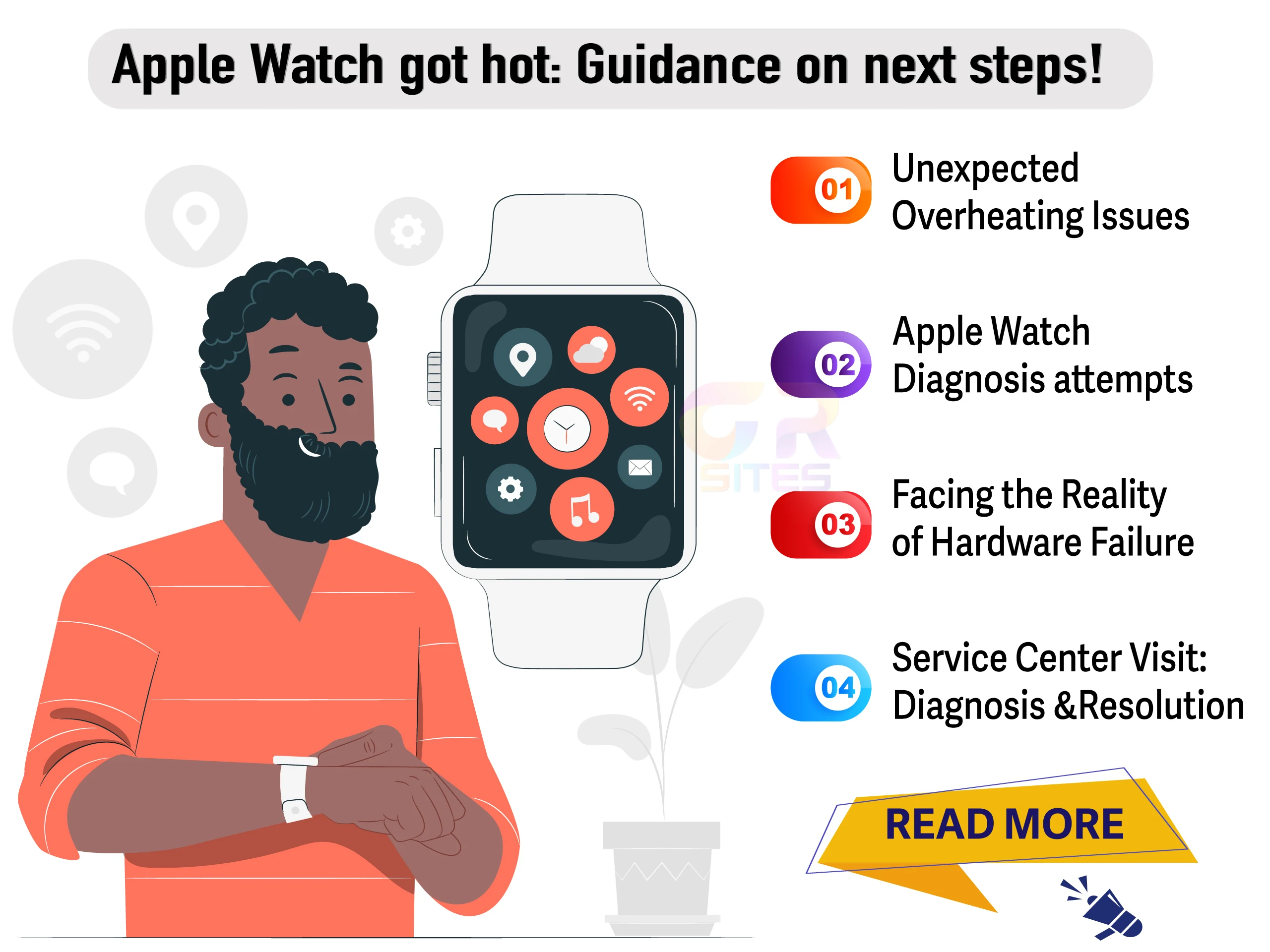
One fine day, the routine with my Apple Watch Series 7 took an unexpected twist. As the day drew to a close, I noticed my reliable companion's battery was running low. No big deal, I thought, just a quick charge should fix it. Little did I know, this was the beginning of an unusual encounter with my Apple Watch.

The Usual Day in Apple-land
  • Heat Beyond Normal: As I took my Series 7 off the charger, I immediately felt something was off. The watch was unusually hot, far beyond the warmth I'd occasionally noticed during regular use. Perplexed, I checked the battery percentage, and to my surprise, the increase was marginal despite a significant charging time.
  • Hoping for a Glitch: My initial assumption was a simple software glitch. Maybe a quick restart or an update would resolve it. So, I held on to the hope that by the next morning, my Apple Watch would be back to its usual self.
Unpleasant Surprise: My Apple Watch Series 7 Overheating Ordeal
What to Do When Your Apple Watch Gets Hot - Immediate Steps
If you find yourself in a similar situation, where your Apple Watch seems hotter than the usual warm post-charge state, here are some immediate steps to take:
  • Remove the Watch from Your Wrist: Let it cool down by taking it off your wrist.
  • Power Off: If the heat persists, power off your Apple Watch for more than 30 minutes to cool it down or bring it to room temperature.
  • Check Background Apps: Close any unnecessary apps running in the background both in iPhone and Apple Watch.
  • Hard Reset: Try hard reset the Apple Watch and connected iPhone at same to time to clear any connectivity or software bugs.
A Hardware Hurdle
  • Persistent Woes: To my dismay, the issue persisted. Despite my attempts to troubleshoot, the overheating and sluggish charging became consistent. It became evident that this was not a mere glitch; a deeper, more troublesome problem was at play.
  • The Turning Point: Acceptance of the inevitable hit hard - I needed professional help. This was not the usual Apple Watch hiccup that could be remedied at home. My trusted Series 7 needed expert intervention.
A Visit to the Service Center
  • The Service Center Stopover: With a heavy heart, I made my way to the Apple service center, my Series 7 in tow. The experience was both reassuring and nerve-wracking. Would it be a quick fix, or was I looking at a major repair?
  • Diagnosis and Resolution: After a thorough examination, the Apple technicians diagnosed a hardware failure, explaining the overheating and the battery struggle. The watch that had been a seamless part of my routine was facing an internal battle.
In this journey of wearable tech woes, I learned a valuable lesson. No gadget, no matter how sleek or smart, is immune to the quirks of technology. My Apple Watch Series 7, once a paragon of reliability, became a testament to the unpredictable nature of our digital companions. So, the next time your device acts up, remember, it might be more than a glitch; it could be a story waiting to unfold. The key lies in swift action, from diagnosing the issue to seeking expert help. So, if your Apple Watch decides to turn up the heat unexpectedly, don't wait - cool heads and timely interventions make for the best solutions.

Friday, October 13, 2023

Unfulfilled Promise: Apple's Battery Woes for older devices

When the Apple Event of September 2023 approached, the tech world braced itself for groundbreaking revelations, and rightfully so. Among the most pressing concerns for Apple users was the vexing issue of battery life. Amidst the buzz and excitement, one conspicuous absence left many disillusioned: the glaring lack of substantial battery life improvements for Apple's flagship iPhone and Apple Watch series. In this article, we delve into the frustrations and implications of Apple's neglect of this crucial aspect of our digital lives.

Quest for Battery Life Enhancement
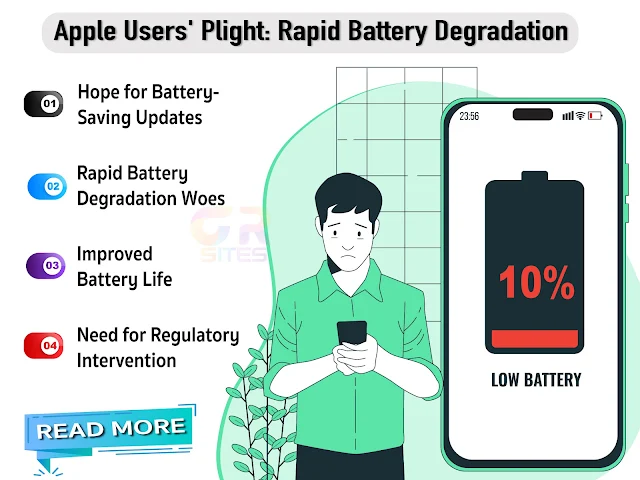
  • Apple User's Plight: Apple users, in particular, have faced this dilemma acutely. iPhones and Apple Watches, while beloved for their sleek design and cutting-edge features, have often left their users grappling with a common woe—rapid battery degradation.
  • Reality Check: However, as the event unfolded, the reality was far from the lofty expectations. Apple's focus seemed to be elsewhere, leading to a deep sense of disappointment among users.
  • Unfulfilled Hope: What many were hoping for was a software-level innovation that could counteract battery degradation. Such features have been introduced in the past, but this time around, the much-anticipated software wizardry remained elusive.
Apple's Battery Woes for older devices
Road Ahead
  • Making Voices Heard: Apple has a track record of not focusing on improving battery life in the older devices. At least some regulators should take a note of it and should force Apple to adhere to some base level battery performance. So, the device doesn’t get dropped of battery life rapidly and at least holds life for little, longer duration. 
  • Hope for Updates: Users can only hope that future updates, perhaps even iOS 17.1, will introduce the battery-saving features they've been longing for.
In conclusion, while the Apple Event of 2023 may have met the lofty expectations regarding new device announcements, the story doesn't end here. In the aftermath of the Apple Event in September 2023, the absence of significant battery enhancements for the iPhone and Apple Watch was a bitter pill to swallow. While we celebrate the strides Apple has made in various other areas, we can't help but yearn for a more substantial solution to the battery predicament. With each update and innovation, there's hope for a future where our devices stay powered longer, allowing us to navigate the digital realm with confidence. So, as we charge our iPhones and Apple Watches once more, we do so with the enduring hope that the next breakthrough in battery technology is just around the corner.

Saturday, May 27, 2023

Impact of Apple's My Photo Stream Shutdown: Need for FREE Access

Introduction: The Frustration of Apple's Photo Stream Shutdown
Apple's decision to shut down Photo Stream on June 26 has caused major frustration among users like me who relied on this feature for seamless photo transfer and access across their iPad, iPhone, and Mac devices. The removal of Photo Stream as a free option and the subsequent push towards iCloud+ subscriptions has left many users disappointed. In this article, we will explore the impact of Apple's decision and the need for a free alternative that required for user to allow seamless photo access across devices.

Understanding the Photo Stream Feature
Photo Stream was a popular feature offered by Apple that allowed users to sync their photos across multiple devices without the need for an iCloud+ subscription. It provided a convenient way to access and share photos seamlessly, ensuring that users could view their images on any of their Apple devices.

Apple's Decision to Shut Down Photo Stream
Apple's recent announcement to shut down Photo Stream has taken many users by surprise. With the removal of this free feature, users now must rely on iCloud to access their photos across devices. This move has raised concerns among users who valued the simplicity and convenience of Photo Stream.

The Impact on Users
The shutdown of Photo Stream has had a significant impact on users who relied on this feature. Many users feel frustrated and disappointed, as they now need to subscribe to iCloud+ to continue enjoying seamless photo access across their Apple devices. This sudden change has disrupted their workflow and forced them to reconsider their options.

Impact of Apple's My Photo Stream Shutdown: Need for FREE Access

The Shift to iCloud and Premium Subscription
With the shutdown of Photo Stream, Apple is emphasizing the use of iCloud as the primary method for syncing and accessing photos. However, iCloud comes with a price tag attached, as users need to subscribe to iCloud+ to unlock the seamless photo access feature. This shift has created a divide among users who were accustomed to the free functionality of Photo Stream.

User Feedback and the Need for a Free Alternative
Apple's decision to remove Photo Stream as a free option has generated significant user feedback. Many users have expressed their disappointment and frustration, highlighting the need for a free alternative that allows seamless photo access across devices. Apple should consider these user sentiments and evaluate the possibility of reintroducing a similar free feature or providing a more affordable subscription option.

The Importance of Seamless Photo Access
Seamless photo access across devices is crucial for users who heavily rely on their Apple ecosystem. It allows them to effortlessly transfer and view their photos regardless of the device they are using. The removal of Photo Stream and the mandatory shift to iCloud+ subscriptions have disrupted this seamless experience, leaving users searching for alternatives.

Conclusion: Addressing User Concerns and Feedback
The shutdown of Photo Stream and the subsequent push towards iCloud+ subscriptions have sparked frustration and disappointment among Apple users. It is crucial for Apple to address these concerns and consider providing a free alternative or more affordable subscription options. By listening to user feedback and acknowledging the importance of seamless photo access, Apple can better serve its user base and maintain their loyalty.

Frequently Asked Questions

  1. Why did Apple shut down Photo Stream? Apple made the decision to shut down Photo Stream as part of its strategy to encourage users to subscribe to iCloud+. By removing the free option, Apple aims to drive more revenue through premium subscriptions.
  2. What are the alternatives to Photo Stream? Users can explore alternative methods such as utilizing third-party apps and services that offer similar seamless photo access across Apple devices. These alternatives may require additional setup but can provide a workaround for users who prefer not to subscribe to iCloud+.
  3. Why is seamless photo access important to users? Seamless photo access allows users to effortlessly transfer and view their photos across their Apple devices. It ensures a smooth and convenient user experience, enabling users to access their memories wherever they are.
  4. Will Apple reconsider its decision based on user feedback? Apple has a history of listening to user feedback and making adjustments accordingly. It is important for users to express their concerns and preferences to Apple, as it increases the likelihood of Apple addressing those needs.
  5. Can I still access my photos without an iCloud+ subscription? With the shutdown of Photo Stream, accessing photos across devices without an iCloud+ subscription becomes more challenging. However, users can explore alternative methods and services that provide similar functionality without relying on iCloud+.

Thursday, May 25, 2023

Apple users Should Embrace Battery Health and Peace of Mind

Apple users Should Embrace Battery Health and Peace of Mind
With the introduction of Apple's battery health feature, users gained access to information about their battery's capacity and performance. This feature empowered users to monitor and understand the health of their device's battery, leading to a newfound obsession with battery percentage and usage optimization.

Apple's Battery Health Feature: Empowering Users
Apple's battery health feature, introduced in recent iOS updates, provides users with valuable insights into the condition of their device's battery. It allows users to check the maximum capacity of their battery, which indicates how well the battery can hold a charge compared to its original capacity. Additionally, users can view information on peak performance capability, which helps them understand if their device is operating at its optimum performance level.

The Obsession with Battery Percentage
With the ability to monitor battery health, users have become increasingly focused on their device's battery percentage. Many individuals are constantly checking their battery levels, trying to optimize their usage to make the battery last as long as possible. The desire to squeeze every bit of power from the battery has led to a pervasive obsession with maintaining high battery percentages.

Understanding Battery Degradation
Over time, all batteries experience a natural degradation in their capacity to hold a charge. This degradation is influenced by various factors such as temperature, usage patterns, and the number of charge cycles. It is important for users to understand that gradual battery degradation is normal and inevitable. However, the battery health feature allows users to monitor this degradation and take appropriate measures to prolong battery life.

Misconceptions and Worries
Despite the availability of battery health information, many users develop misconceptions and unnecessary worries about their battery's performance. Some common misconceptions include the belief that keeping the battery percentage at 100% always is beneficial or that charging the device overnight will damage the battery. These misconceptions can lead to unnecessary stress and anxiety regarding battery usage.

The Balance between Battery Health and User Experience
It is crucial to maintain a balance between battery health and the overall user experience. While optimizing battery usage is important, it should not come at the cost of sacrificing the device's functionality or usability. Apple has designed its devices to provide a seamless user experience, and users should feel confident in utilizing the full capabilities of their devices without constant battery anxiety.

The Psychological Impact of Battery Anxiety: 
Constantly worrying about battery percentage can have a negative psychological impact on users. The fear of running out of battery power, known as "battery anxiety," can lead to feelings of stress and restriction. It is essential to recognize the psychological toll this obsession can have and take steps to alleviate unnecessary worries.

Embracing a Healthy Approach
Instead of fixating on battery percentage, users should adopt a healthy approach to battery usage. This involves understanding the limitations of the battery, implementing practical optimization strategies, and accepting that gradual battery degradation is a natural part of the device's lifespan. By focusing on a holistic approach to device usage, users can find peace of mind and enjoy their devices without unnecessary battery-related concerns.

Myth-busting: Separating Facts from Fiction
There are many myths surrounding battery usage and optimization. Let's debunk some common misconceptions and separate facts from fiction:
  • Myth: Always charging your device to 100% is beneficial.
  • Myth: Leaving your device plugged in overnight damages the battery.
  • Myth: Closing background apps improves battery life.
  • Fact: Lithium-ion batteries are designed to be charged and discharged regularly.
  • Fact: Extreme temperatures, both hot and cold, can affect battery performance.

Conclusion: Embracing Battery Health and Peace of Mind
In conclusion, Apple's battery health feature has undoubtedly sparked a fascination with battery percentage and optimization among users. While it is important to be mindful of battery usage and take steps to prolong battery life, it is equally crucial to maintain a healthy approach and avoid unnecessary worries. By understanding battery degradation, debunking myths, and embracing a balanced usage pattern, users can enjoy their devices without being consumed by battery anxiety.

Frequently Asked Questions
  1. Is it necessary to always keep my device's battery at 100%? Keeping your device's battery at 100% all the time is not necessary and may even have a negative impact on the battery's long-term health. It is recommended to charge your device between 20% and 80% for optimal battery performance.
  2. Will charging my device overnight damage the battery? Charging your device overnight will not damage the battery. Modern devices are designed to stop charging when they reach 100%, preventing overcharging.
  3. Do closing background apps improve battery life? Closing background apps can help conserve battery life to some extent, but modern operating systems are designed to manage background processes efficiently. Manually closing apps may not have a significant impact on battery performance.
  4. How do extreme temperatures affect battery life? Extreme temperatures, both hot and cold, can adversely affect battery performance. It is best to avoid exposing your device to extreme temperature conditions for prolonged periods.
  5. Are there any advancements in battery technology to look forward to? Yes, battery technology continues to advance. Companies like Apple are investing in research and development to improve battery efficiency, capacity, and lifespan in their devices. Users can expect ongoing improvements in battery performance and longevity.

Sunday, April 30, 2023

MAC Time Machine: Unleashing the Full Potential of Your Backup

MAC Time MachineAre you a MAC user who relies on Time Machine for file backups? If so, you may not be utilizing this powerful functionality to its full potential. While Time Machine is a convenient and reliable way to back up your important files on MAC, it has some limitations that can impact its effectiveness. In this article, we will explore these limitations, focusing on the lack of control over backup frequency and timing, and how it affects MAC performance. We will also discuss possible solutions and recommendations to help you optimize your Time Machine backups and ensure the safety of your valuable data.
  • Limitations of current Time Machine setup: Time Machine is a built-in feature of MAC that automatically backs up your files to an external storage device, such as an external hard drive or a network storage option. However, one of the major limitations of the current Time Machine setup is that it lacks flexibility in determining the frequency and timing of backups. By default, Time Machine backs up files every hour, and this cannot be changed by users. Additionally, users do not have the option to specify a particular time for the backup process to occur, resulting in automatic and continuous backups that can impact MAC performance.
  • Importance of frequency and timing in file backups: Frequency and timing are crucial factors in file backups, as they determine how often your files are backed up and when the backup process occurs. With the current Time Machine setup, files are backed up every hour, which may be excessive for some users, especially if they work with large files or have limited storage space. On the other hand, for users who frequently update their files, an hourly backup may not be frequent enough to ensure the latest versions of their files are backed up. Similarly, the lack of control over timing can be inconvenient for users who prefer backups to occur during non-working hours or when the MAC is not in use.
  • Lack of control over Time Machine backups: Many MAC users have expressed frustration with the lack of control over Time Machine backups. The inability to adjust the frequency and timing of backups according to their specific needs can be a source of inconvenience and annoyance. Users may find themselves constantly interrupted by the automatic backup process, which impacts their productivity and disrupts their workflow. Moreover, the continuous backups may result in multiple versions of the same file being stored, leading to cluttered and redundant backups.
  • Impact on MAC performance due to background process: The automatic and continuous backup process of Time Machine can also have an impact on MAC performance. As the backup process runs in the background, it consumes system resources, such as CPU usage, RAM, and storage space, which can slow down the MAC and affect its overall performance. Users may notice a decrease in MAC speed and responsiveness, especially when working with resource-intensive tasks, such as video editing or gaming. Additionally, the constant backup process may cause the MAC to heat up and consume more power, resulting in reduced battery life for MAC laptops.
Possible solutions and recommendations
To overcome the limitations of the current Time Machine setup and optimize your backups, here are some possible solutions and recommendations:
  • Adjust backup frequency: If you find the hourly backup frequency excessive, you can consider changing it to a longer interval, such as every 4 or 6 hours, depending on your file update frequency and storage space availability. To do this, you can use third-party backup software, such as Carbon Copy Cloner or SuperDuper, which allow you to customize the frequency of backups according to your preferences.
  • Schedule backups during non-working hours: If you prefer backups to occur during non-working hours or when your MAC is not in use, you can schedule the backup process using automation tools, such as Automator or third-party apps like BackupLoupe. These tools allow you to specify the timing of backups and ensure they do not interrupt your workflow.
  • Exclude unnecessary files and folders: Time Machine backs up all files and folders on your MAC by default, including system files and applications. However, you can exclude unnecessary files and folders from the backup process to reduce the amount of data being backed up and save storage space. You can do this through the Time Machine preferences or by using third-party backup software.
  • Use multiple backup destinations: Time Machine allows you to use multiple backup destinations, such as different external hard drives or network storage options. By using multiple backup destinations, you can rotate them and store backups in different locations, ensuring redundancy and data safety. This also allows you to control the timing and frequency of backups on each destination independently.
  • Monitor backup activity: Keep track of your Time Machine backups and their impact on your MAC performance. You can use tools like BackupLoupe or Time Tracker to monitor backup activity, check the status of backups, and identify any issues or errors that may affect the effectiveness of your backups.
Time Machine is a powerful backup tool that comes with MAC, but its default setup may not always be suitable for every user's needs. The lack of control over backup frequency and timing can impact MAC performance and disrupt workflow. By adjusting backup frequency, scheduling backups during non-working hours, excluding unnecessary files, using multiple backup destinations, monitoring backup activity, and considering alternative backup solutions, MAC users can optimize their Time Machine backups and ensure the safety of their valuable data. Ready to explore more? Head over to "G R Team Sites" for additional content on more such topics.

Wednesday, December 21, 2022

How smart android box was my preferred streaming device

smart android box was my preferred streaming device

I have been looking out for affordable and reliable streaming device for my old TV for past several months. After careful consideration and comparison with Apple’s 4K TV device, I came to conclusion that Android streaming box would be perfect fit for my requirements. The decision on selecting Android streaming device was not made with hasty comparison and there were few pointers that ensured my decision easier. Following are my reasons on why Android streaming box was my preferred choice: 
  • Affordable cost: The cost of getting android box was more affordable than getting Google’s Chromecast device and Apple’s 4K TV box. In addition, the android box was offering more value for money than the any other streaming device available in the market, even better than Google’s own Chromecast device. 
  • Direct TV (DTH) and OTT option: The other unique proposition from Android box that stands out from Apple’s 4K TV box and Google’s Chromecast device was the OTT app integrations and DTH viewing option. So, the android box offered by the DTH provider have option of viewing both direct TV and OTT applications when needed. It reduces the pain of manually converting from direct TV to casting screen or OTT application movies and series. 
With above-mentioned options, it is evident that getting DTH service providers android box was the most affordable and feature rich option. For more such articles or information, please feel free to check out the articles published in “G R Team Sites”

Thursday, September 8, 2022

My expectations for Apple’s October event in 2022

Apple’s October event in 2022
With the end of Apple’s September event introducing new Apple Watch version, AirPods Pro 2nd generation and iPhone 14 lineups, the focus now shifts to next Apple’s event. The next Apple event may be scheduled during the first week of October 2022 and the expectations are already muted. Following is the list of announcements that is expected from Apple during their October 2022 event
  • Next MacOS and iPadOS software launch: With the introduction of new iPadOS and MacOS versions during WWDC 2022, Apple has not revealed their timeline for official launch and most likely it would be their first introduction in the October 2022 Event. 
  • iPad 10th generation launch: With no mention of new iPad launch in the September 2022 event, it is evident that the next iPad 10th generation would be launched during October 2022 event with introduction of USB Type-C connectivity and support for Apple 2nd generation Pencil. 
  • iPad pro and Mac mini with M2 configurations: At last, the final expected launch in October 2022 event would be launch of iPad pro versions with M2 chips and possibility of M2 Mac mini with slightly increased pricing options. The iPad pro has not been refreshed in this year’s March 2022 event and with introduction of M2 chip for MacBook Air, the iPad Pro automatically qualifies for adoption to M2 chip at the earliest. 
Other than the above listed agenda, there were not much scope for any other introductions in October 2022 event and Apple might have shorter event duration. To read more such articles, please feel free to check out the list of sites in “G R Team Sites.”

Sunday, November 14, 2021

Why Apple has not included Face ID in M1 Pro and M1 Max


Face ID in M1 Pro and M1 Max

Apple has recently launched M1 pro and M1 max to the market and has received much positive response from the technology experts. However, most tech experts were critical of Apple for not including Face ID on the notch and I could understand the reasons for Apple not including the Face ID authentication in the MacBook. Following are my reasons for not including Face ID in the latest M1 pro and M1 Max
  • Automatic password/purchase authentication: Since most users will be spending their time working on the MacBook, there are chances that the payment authentication can happen automatically through Face ID and may result in monetary loss.
  • Accidental Face authentication without usage: Other concern of integrating Face ID into the notch of the latest MacBook is that, even if you are not using your MacBook and your family or kid using for few minutes, there are chances that the Face ID authentication may happen automatically if your come closer to the MacBook. 
Even though, Apple can address above concerns with new system preference or options, it may not be feasible for basic users to modify those settings and would eventually complicate their Face ID authentication process. For more such articles, please feel free to check out the “G R Team Sites”

Tuesday, September 28, 2021

Unavailability of iCloud+ for older Macs like 2012 MacBook Pro


Unavailability of iCloud+ for older Macs

As my readers knew that I have been using 2012 MacBook Pro for past few years and have no intentions of replacing my MacBook pro anytime soon. However, recently I was looking forward to subscribing for Apple One subscription and was facing roadblock when heard that iCloud+ will support only on latest Macs or the MacBook Pro's that are upgraded to Monetary operating system. Following are my justification on why Apple should include iCloud+ support for older macs and enable Apple One subscribers like me to enjoy iCloud+ subscription to the fullest
  • Using Latest iPhone OS and iPadOS: Lack of update to my old MacBook Pro 2012 doesn't mean that I still using old Apple ecosystem, as I have latest iOS 15 on my iPhone 11 and iPadOS 15 in my 7th Gen iPad. While I can leverage iCloud+ features on both my handheld devices, lack of availability in MacBook Pro makes me deterrent and restricted access to iCloud+ features.
  • Using Mac for most day-to-day activities: Even though I have latest version of iOS and iPadOS, I spend most of my time in my 2012 MacBook pro and do all my productivity activities in my MacBook Pro. While I can leverage private relay in my handheld devices, the lack of iCloud+ availability in older mac will not address my requirement and subscription to Apple One does not makes sense. 
To read more such articles from us, please feel free to check out the articles published in "G R Team Sites" 


Monday, June 14, 2021

How apple music is steam ahead than Amazon Music 

I use Amazon music for a long time and been big fan of it. However, with recent announcements from Apple Music, with integration of Dolby atmos has changed situation altogether and usage of Amazon music have become questionable due to following reasons. 
  • Support for Dolby atmos & Spatial audio: Apple has announced that it’s entire catalogue of music will have Dolby atmos support before end of the year. However, Amazon music has not made official announcement or commitment on launch of Dolby support for its music catalogue. Just announcement of Dolby support for its music catalogue will not impact its users, until there is official commitment on enabling it for all users. 
  • Siri integration: I understand that Amazon music has Alexa voice assistant and was on par with Siri on identifying songs. However, for Alexa voice assistant to work, the music application should be open and cannot be summoned when iPhone is idle or if application is closed. 
Hope Amazon addresses above concerns at the earliest, so its loyal users don’t think of switching to another music platform and continues to stay with Amazon music. For more such articles, please feel free to check out the G R Team Sites. 

Monday, September 10, 2018

22. Anticipation for new iPhone Xs

So, for the readers who were not aware of what’s happening, I own an iPhone 6 which I bought 4 years back and the battery was replaced under the Apple’s replacement program. The new iPhone was about to be launched at 12th September 2018 and there have been lot of rumors about the features and functionalities of the phone. However, none of the features and functionalities were tempting as it used for earlier iPhone's and during Steve Jobs era. The only thing which motivates me to buy the new iPhone is the camera setup and ageing iPhone 6 design. I didn’t want to upgrade to the new iPhone, due to its expensiveness and new technology being upgraded for every year. Other important factor to be considered is that my uncle is due to travel US later this year and I can get the new iPhone at the most affordable price and can get it at the earliest. Now I am in dilemma with both positives and negatives, whether to opt for new iPhone Xs or still can run the juice with 4-year-old iPhone. Continue reading at “G R Team Sites”

Sunday, December 3, 2017

Information for Quantum Computers

Simple fundamental of quantum computing is that, as per wave particle duality in quantum physics a matter can occupy a wave nature or particle nature depends upon the experiment we carried out with it. Same analogy with quantum computer in classical sense the memory-field of a computer is either filled up by '0' or by '1'. But in quantum computing both memory states can be occupied simultaneously. Such computers are very fast to perform an operation than classical computer like in normal cases. Google search engine took 0.10- 0.25 seconds to find out any web page with any keyword. But if quantum algorithms are implemented- this time will change into micro-seconds and will require much less memory than it is now. But this area is under vast research and no such computer is developed so far, but in near future we may succeed.

Sunday, October 8, 2017

Super Computer from IBM

Guys I came across an article about IBM's New venture and hope it will help you to know about new technology. IBM researchers from the T.J. Watson Research Center reached a significant milestone in the quest to send information between the "brains" on a chip using pulses of light through silicon instead of electrical signals on copper wires. The breakthrough -- a significant advancement in the field of "Silicon Nano photonics" -- uses pulses of light rather than electrical wires to transmit information between different processors on a single chip, significantly reducing cost, energy and heat while increasing communications bandwidth between the cores more than a hundred times over wired chips. The new technology aims to enable a power-efficient method to connect hundreds or thousands of cores together on a tiny chip by eliminating the wires required to connect them. Using light instead of wires to send information between the cores can be as much as 100 times faster and use 10 times less power than wires, potentially allowing hundreds of cores to be connected together on a single chip, transforming today's large supercomputers into tomorrow's tiny chips while consuming significantly less power. IBM's optical modulator performs the function of converting a digital electrical signal carried on a wire, into a series of light pulses, carried on a silicon Nano photonic waveguide. First, an input laser beam (marked by red color) is delivered to the optical modulator. The optical modulator (black box with IBM logo) is basically a very fast "shutter" which controls whether the input laser is blocked or transmitted to the output waveguide. When a digital electrical pulse (a "1" bit marked by yellow) arrives from the left at the modulator, a short pulse of light is allowed to pass through at the optical output on the right. When there is no electrical pulse at the modulator (a "0" bit), the modulator blocks light from passing through at the optical output. In this way, the device "modulates" the intensity of the input laser beam.

Sunday, September 10, 2017

Suggestion to host Pictures

A picture hosting service allows individuals to upload images to an Internet website. The image host will then store the image onto its server, and show the individual different types of code to allow others to view that image. Typically image hosting websites provide an upload interface; a form in which you specify the location of an image file on your local computer file system (using a browse button). After pressing a “Upload” button the file is uploaded to the image host’s server. Some image hosts allow you to specify multiple files at once, in this form, or the ability to upload one ZIP file containing multiple images. The Pict is a new website for image hosting service. You can upload many numbers of images from local computer, other system and from URL. After this process, your image is hosted on their server. This photo hosting network allows you to link images with HTML code, linking with BBcode and a click able thumbnail that is linked to the full image. This photo hosting service allows you to save to you email and export any where in Internet. Image hosts also allow tools such as the ability to create photo blogs or galleries with your images, or add them to a sideshow for easier viewing. Upload as many photos in Pict.com and have fun with your friends.

Sunday, October 16, 2016

Logitech Headphone Information

Love your iPod but hate the cords? Wondering how you can manage a wireless musical experience without a huge docking system? Logitech has a solution. With up to six hours of play time and a 33 feet range, you can listen in comfort with the Logitech FreePulse Blue tooth headsets. It comes with state-of-the-art durable construction: the high carbon spring-steel headband is extremely light weight and the soft-touch comfort rings stay securely on your head. Take control of your music with integrated volume controls and bass boost. It's compatible with most players; just change, plug and play. FionaJewelry.com is the world-leading China jewelry wholesale company, we supply more than 100 thousand fashion jewelries, all at low wholesale prices. We have experience with professional service and quality jewelry products made in China.

Sunday, September 18, 2016

Christmas Photo Cards and Invitations

Minted.com is a site that sells unique holiday cards and wedding invitations. Minted is a new online store offering fresh, modern custom stationery and invitations. They believe that great design lives and thrives in the hands of independent brands and designers that consumers may not hear about or have access to through traditional retailers. For their launch, they have handpicked a selection of the best independent stationery brands, known for their artistry, exquisite printing, and superb papers. In Minted, they love the idea that their stationery will find its way into your most personal celebrations, and they don't take that honor lightly. That's why they only carry brands that use fine paper stock, rich inks, and crisp printing methods. A christmas photo cards is a greeting card sent as part of the traditional celebration of Christmas in order to convey between people a range of sentiments related to the Christmas season. In minted they have a huge collection of various christmas photo cards. You want the best baby announcement for the special occasion so it is important to research the company you are purchasing your birth announcements from. So minted is the best option to choose from. They also offer premium occasion cards. From Minted you can send many premium ecards for any occasion. You could say that quality is an obsession for them. They stand behind their products with a 100% satisfaction guarantee. Because they believe that online stores should make your life easier, they also offer a suite of add-on services, including custom design, calligraphy, and hand-addressing of envelopes. They are fanatical about bringing you great design, and they are constantly searching for great independent brands and the latest up-and-coming talent. So check back often for fresh products and new faces in their growing design roster. In Minted, you'll always find the freshest designs on paper.